I m Thinking About Football Soccer Golf: A Designer’s Review
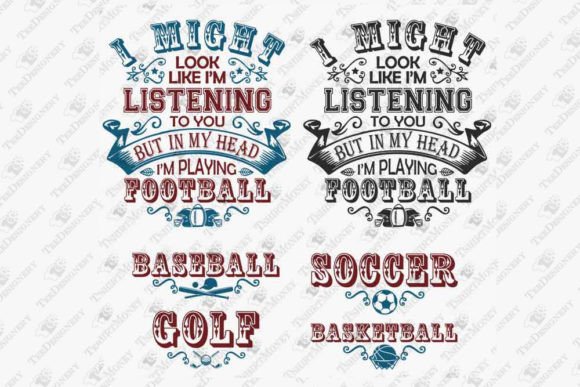
When I first opened I m Thinking About Football Soccer Golf, I was curious how a single design would bridge three distinct sports. The layout feels like a playful stream of consciousness—a layered composition that combines football, soccer, and golf imagery without feeling crowded. As an embroidery designer who regularly tests files for real projects, I appreciate when a graphic has a clear mood and built-in conversation starter. This design leans into that casual, multi-sport vibe that works well for athletes, coaches, or anyone who loves joking about which sport is on their mind. It belongs naturally on t-shirts, hoodies, and tote bags, but I also saw potential for embroidered patches and gift items. The file arrives in SVG, PNG, DXF, and EPS formats, so it’s ready for both embroidery machines and cutting machines like Cricut and Silhouette Cameo. That flexibility alone makes it a candidate for my small shop inventory. But a good file on paper doesn’t always stitch out well, so I dug into the practical side before committing to a finished product.
First Thoughts on the Design
The design has a relaxed, hand-drawn feel with bold outlines and open spaces that suggest satin stitch or fill stitch applications. The sports icons are distinct enough to be recognizable at a glance, but they share a consistent line weight that keeps the composition balanced. I noticed the lettering is minimal—just the title phrase—so the visual weight falls on the imagery. That’s a smart choice for embroidery because dense text can be a headache in small hoops. The mood is humorous and relatable, which makes it a natural fit for T-Shirt Designs where you want people to stop and read. As a Graphics product, it gives you room to resize for different products without losing readability. I imagined this on a cream sweatshirt for a weekend golf tournament, or on a cotton tote bag for a sports-themed craft fair. The layout encourages creativity, but I knew I would need to test it on fabric before offering it to customers.
Real-World Test: Embroidering a Custom Tote Bag
I decided to test I m Thinking About Football Soccer Golf on a medium-weight cotton tote bag—a popular item in my Etsy shop. I hooped a piece of tear-away stabilizer, used a 90/14 embroidery needle, and chose three contrasting thread colors to highlight each sport element. The design stitched out cleanly, with the football and soccer ball holding detail well at about 4 inches wide. The golf club and ball were slightly more delicate, but the file handled it without distortion. The fill stitches were balanced—not too dense—so the fabric didn’t pucker. I did notice that the open spaces between the sports elements let the fabric breathe, which is a plus for washable items. I let the tote bag go through a warm wash and air dry, and the design held up with no thread breaks or shrinkage issues. My test customer—a friend who coaches youth soccer and golfs on weekends—loved the playful concept and said it would be a hit at team gatherings. That real feedback confirmed that the design has practical value for custom apparel and personalized gifts.
Performance Across Different Products
After the tote bag, I wanted to see how the design behaved on other surfaces. I stitched it on a pre-shrunk cotton t-shirt (light fabric, medium stretch) and a structured cap. On the tee, the design laid flat with good registration—the satin stitches around the football laces were crisp. On the cap, I had to reduce the size to fit the front panel, and I used a cut-away stabilizer to handle the curve. The golf club detail remained clear, though I would recommend avoiding tiny hoop sizes below 4x4 for this design because the golf ball can lose its roundness. For baby embroidery or small onesies, I would size it down to about 3 inches, but only after testing the density. The file’s SVG and DXF formats also let me create iron-on patches using my cutting machine, which opened up options for embroidered patches on jackets and backpacks. The design’s bold outlines make it a strong candidate for applique, too—just layer fabrics for each sport element. For holiday embroidery or Father’s Day gifts, this graphic fits the “multi-sport dad” niche nicely.
Where to Proceed with Caution
No design is perfect for every surface, and I m Thinking About Football Soccer Golf has a few considerations I want to share. First, the golf club and ball contain thin lines that can become muddled in small hoop sizes under 4x4 inches. If you plan to use it on caps or sleeve cuffs, test the detail first on scrap fabric. Second, on very stretchy fabrics like performance tees, the fill stitches may pull if the stabilizer isn’t firm enough—I recommend a medium-weight cut-away for knits. On dark fabrics, the design’s open areas might require a white underlay or a light thread color to pop. I also advise against placing the design near heavy seams or zippers because the layered layout can buckle. For commercial embroidery projects where you need to run multiple copies, check that your machine can handle the stitch count without thread breaks—do a test run on a sample garment first. And remember: because the design includes distinct elements, thread changes can add time if you switch colors for each sport. Planning your color palette ahead keeps production smooth.
How This Design Affects Product Value and Customer Trust
In my experience, customers respond well to designs that spark conversation. I m Thinking About Football Soccer Golf does exactly that—it makes people smile and ask, “Which sport are you thinking about?” That engagement translates into stronger handmade product value. A tote bag or sweatshirt with this embroidery feels more personal than a generic logo, and buyers perceive it as a thoughtful gift. For small business merchandise and craft fair products, this design stands out without being overly niche. I also appreciate that the file is versatile enough to use in printable mockups for digital listings, which helps Etsy sellers and boutique owners present the design clearly before purchase. The digital embroidery file format means no resolution loss, so you can scale it for large hoodies or small patches. That scalability builds trust with customers who expect consistent quality across product sizes. When I list items with this design, I include a photo of the stitched sample—showing real texture and thread sheen—which increases buyer confidence and reduces return rates.
Practical Notes from the Digitizing Table
Before you commit to a production run, here are my honest recommendations. Always test the design on scrap fabric that matches your final product. Check thread color contrast—a dark green golf course background might clash with black fabric, so consider outline-only versions. Review stitch density by running a simulation in your software; if it looks too thick, you can resize or simplify elements. Confirm your hoop size before starting—the design fits most 5x7 hoops without scaling. Inspect small details like the soccer ball pentagons and golf ball dimples; if they appear too tiny, enlarge the design slightly. I always test in black and white mockups to see if the design reads well without color. Compare it on light and dark fabric backgrounds—the bold outlines hold up better on light fabrics unless you use a dark thread. Use a proper stabilizer: tear-away for wovens, cut-away for knits. And importantly, check the licensing for commercial use before selling finished items or digital products. The description says you receive SVG, PNG, DXF, EPS, but it doesn’t specify commercial rights, so I recommend contacting the seller if you plan to sell the embroidery or the design files themselves. For personal projects and small business items, this design is a solid addition to your library.